
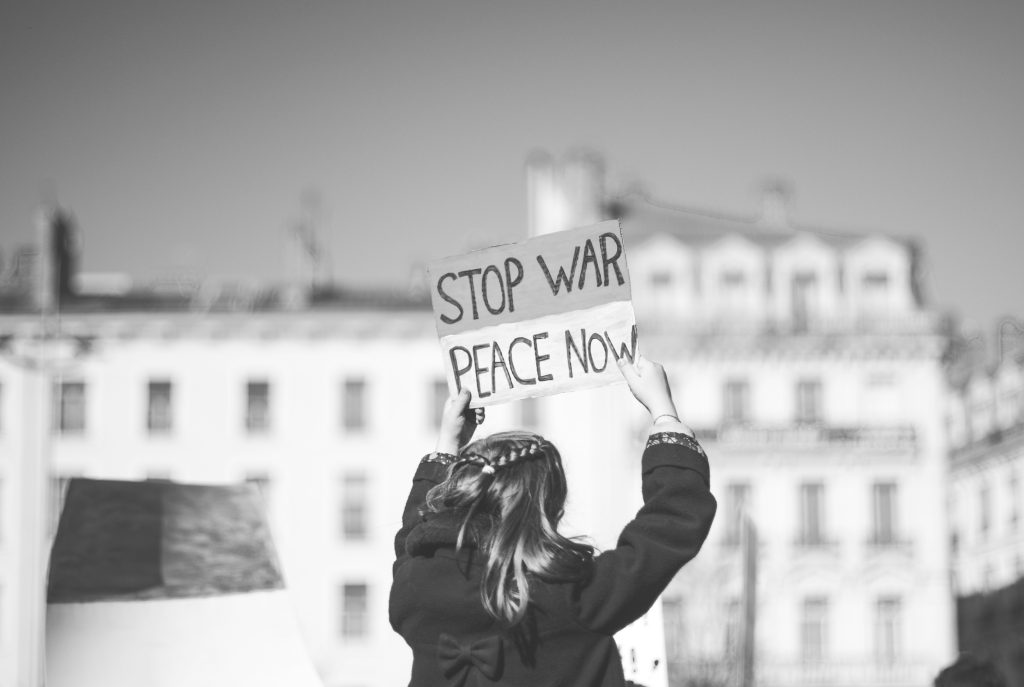
Canadian churches and global church bodies are releasing statements on the war on Iran and the wider conflict in the Middle East. We are reminded of the newspaper advertisement from 30+ Christian and ecumenical communities released in 2003 for the people of Iraq: “… war will cause massive human suffering, and will not bring peace”. Click on the links to each statement to read more.
Calling the Catholic Faithful to Prayer for Peace in the Middle East
May the message of the Gospel inspire us to be peacemakers, to cultivate solidarity with people affected by war, and to keep alive our hope for a better world. By uniting our voices in prayer, we believe that God can transform hearts and open paths where everything seems closed. Together, let us pray for peace in the Middle East and for a world reconciled in the love of Christ.
- Permanent Council of the Canadian Conference of Catholic Bishops (5 March 2026)
And let us consider how to provoke one another to love and good deeds. (Hebrews 10:24)
It is with heavy hearts that we hear of the recent attacks on Iran by Israel and the United States. We are reminded of the horrors of war and its devastating consequences. And we are reminded of our call to be peacemakers and witnesses to God’s grace. Our concerns are heightened and so is our sense of common mission.
- The Evangelical Lutheran Church in Canada (3 March 2026)
Recent and continuing attacks on Iran by the United States and Israel, and subsequent attacks by Iran on other neighbouring nations, greatly increase conflict and violence in a region of the world where we hear from our partners that there is already immense suffering.
- The Presbyterian Church in Canada (6 March 2026)
United Church Expresses Grave Concerns over Military Attacks Against Iran
All governments, including Canada, should take every step possible, in accordance with international law, to uphold and demand respect for state sovereignty including control of all national resources, and prevent further escalations.
- The United Church of Canada (28 February 2026)
Joint Ecumenical Statement on the Widening Conflict in the Middle East
We appeal for an immediate ceasefire, for the urgent resumption of diplomatic engagement and political dialogue through established international and regional mechanisms, and for full compliance by all States with their obligations under international law, including the UN Charter.
Our appeal is grounded in our faith and our Christian ethical values, as well as in law and policy. We affirm that war is incompatible with God’s very nature and will for humanity, and against our fundamental Christian principles. Peace is a moral and spiritual imperative rooted in our faith in a God of justice and compassion, and a gift not achieved through force or strength of arms.
- The World Council of Churches, Middle East Council of Churches, Lutheran World Federation, World Communion of Reformed Churches, World Methodist Council, Mennonite World Conference, Christian Conference of Asia, and ACT Alliance (9 March 2026)
Peacemaking requires abolishing war and transforming conflict: He shall judge between the nations and shall arbitrate for many peoples; they shall beat their swords into ploughshares, and their spears into pruning-hooks; nation shall not lift up sword against nation, neither shall they learn war anymore. (Isaiah 2:4). Engaging in war constitutes a failure. The church must address the well-organized roots of violence and take up the responsibility to prevent conflicts and to protect people. Assessing the causes and conduct of war begins with reluctance toward entering into conflict and promoting a deep desire for resolution and lasting peace.
- The Canadian Council of Churches (23 May 2018)